
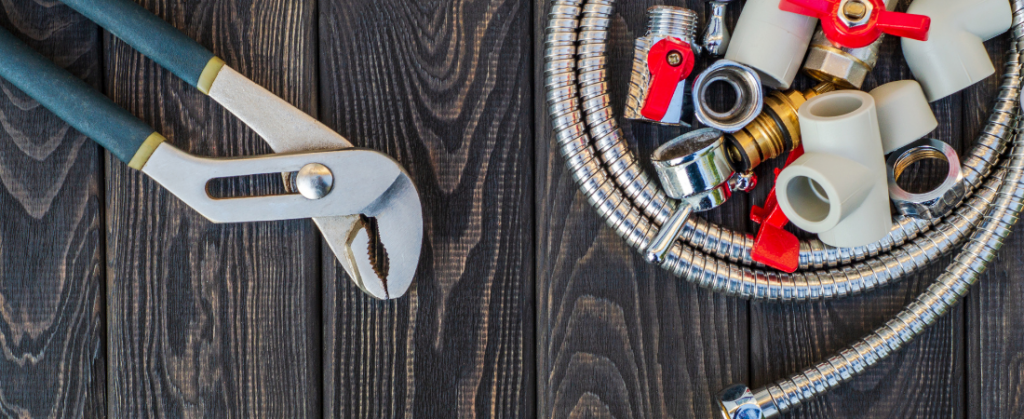
A small plumbing problem always seems to happen at the worst time. A dripping tap starts late in the evening. A sink begins draining slowly just before guests arrive. A washing machine hose starts weeping on a Sunday. A toilet keeps running when you are already busy.
You do not need a full plumber’s van in the cupboard, and you should not try to tackle jobs that need a qualified professional. But keeping a few basic plumbing bits at home can help you deal with simple problems, contain small leaks, make temporary sense of what is happening, and avoid a last-minute scramble for the right part.
This guide covers the practical plumbing items that are worth keeping in most homes. It is aimed at small repairs, simple checks and everyday maintenance, not major plumbing work.
If the problem is serious, hidden, spreading, near electrics, connected to gas, or you cannot turn the water off, call a qualified professional.
Why keep a small plumbing kit at home?
Most household plumbing problems start small. A washer wears out. A trap works loose. A hose connection drips. A plughole begins to drain slowly. A pipe clip breaks. A small leak appears under the sink.
Having a few basic items to hand means you can often do one of three useful things.
You can stop the problem getting worse, for example by catching water, turning off the supply or tightening a loose fitting.
You can fix a very small issue, such as replacing a hose washer or reseating a simple waste trap washer.
You can identify what you need, so that a trip to Collins Hardware is quicker and more useful.
The aim is not to replace a plumber. The aim is to be prepared for the small, common jobs that happen in everyday homes.
1. A plunger
A plunger is one of the most useful plumbing basics to keep at home.
It can help with slow-draining sinks, basins, baths and some minor blockages. Used properly, it creates pressure that can help shift a blockage without immediately reaching for stronger products.
For sinks and basins, choose a standard cup plunger. For toilets, a toilet plunger with a flange is usually more effective because it forms a better seal.
Keep one for sinks and basins, and a separate one for toilets. It is more hygienic and makes life simpler when a blockage happens.
Useful for:
Slow-draining kitchen sinks.
Blocked bathroom basins.
Minor bath or shower tray blockages.
First checks before using drain cleaners.
2. Sink and drain unblocker
A sink or drain unblocker can be useful for minor blockages, but it should be used carefully and only as directed on the product label.
Kitchen sink blockages are often caused by grease, food residue and everyday debris. Bathroom blockages are often caused by hair, soap and toothpaste residue.
Before using a chemical unblocker, it is often worth trying the simple things first: remove visible debris, check the plughole, use a plunger, or clean the trap if it is safe and easy to access.
Never mix drain cleaning products. Do not use them if you have already used another chemical product, and be cautious around old pipework, standing water and badly blocked drains.
Useful for:
Minor sink blockages.
Slow-draining basins.
Maintenance when used correctly.
Jobs where a plunger alone has not helped.
3. A sink strainer
A sink strainer is a small item that can prevent plenty of hassle.
It sits in the plughole and catches food scraps, tea leaves and other debris before they get into the waste pipe. It is especially useful in kitchen sinks, utility sinks and anywhere food is rinsed from plates, pans or bowls.
It will not solve every blockage, but it can reduce the amount of debris entering your pipework.
Useful for:
Reducing food scraps in kitchen drains.
Helping prevent slow-draining sinks.
Simple everyday prevention.
Homes without a waste disposal unit.
4. PTFE tape
PTFE tape is a handy roll of thin white tape used on some threaded plumbing fittings.
It helps create a better seal on suitable threaded joints. It is commonly used on certain pipe threads, shower hose connections, radiator valve tails and some other fittings where a threaded seal is required.
It is not a fix for every leak. It should not be wrapped around any random leaking joint and hoped for the best. Some fittings seal with washers, olives, rubber seals or compression joints instead. Using PTFE tape in the wrong place can make a fitting worse rather than better.
Useful for:
Suitable threaded fittings.
Some shower hose or tap connector jobs.
Small jobs where a threaded seal is required.
Keeping in the kit because it takes up almost no space.
5. Spare washers
Washers are some of the smallest and most useful plumbing spares in the house.
A worn, missing or damaged washer can cause drips from hose connections, shower hoses, outside taps, washing machine hoses and some waste fittings. Keeping a small mixed pack of washers can save a trip out for a very simple repair.
Common useful washers include hose washers, tap washers, shower hose washers and waste pipe washers.
If you are not sure what type or size you need, remove the old washer if it is safe to do so and bring it into Collins Hardware. Matching the old part is usually much easier than guessing.
Useful for:
Leaking shower hoses.
Dripping hose connectors.
Outside tap connections.
Washing machine and dishwasher hose connections.
Some tap and waste fitting repairs.
6. Jubilee clips and hose clips
Jubilee clips, also called hose clips, are useful for securing flexible hoses and some connections.
They are often used where a hose needs to be clamped firmly around a fitting. They can be useful in gardens, garages, utility areas and some appliance-related jobs.
The key is using the right size. A clip that is too small will not fit, and one that is too large may not tighten properly.
Useful for:
Securing suitable hoses.
Garden and utility jobs.
Some appliance hose situations.
Temporary tidying of loose hose connections where appropriate.
7. Replacement hose connectors
Hose connectors are worth keeping at home if you use an outside tap, garden hose, pressure sprayer, watering system or appliance hose.
A small drip from a hose connection is often caused by a worn washer, cracked connector or poor fit. Sometimes replacing a simple connector solves the issue quickly.
Useful items include outside tap connectors, hose end connectors, hose repair connectors and spare hose washers.
Useful for:
Garden hoses.
Outside taps.
Watering systems.
Minor hose leaks.
Seasonal garden jobs.
8. Pipe clips
Pipe clips help secure pipework neatly and reduce movement.
Loose pipework can knock, rattle or shift when water runs through it. While some pipe noises need professional investigation, a visible loose pipe in a cupboard, garage, utility room or under a sink may simply need better support.
Pipe clips come in different sizes, so it helps to know the pipe diameter before buying them.
Useful for:
Securing visible pipework.
Tidying under-sink pipe runs.
Reducing movement in accessible pipework.
Replacing broken or missing clips.
9. Plumber’s mait, silicone and sanitary sealant
Sealants are useful, but they need to be used in the right place.
Sanitary silicone is commonly used around baths, basins, sinks, showers and splashback areas. It helps stop water getting behind fixtures when applied properly to a clean, dry surface.
Plumber’s mait is a flexible putty-type sealant often used for certain waste fittings and sanitaryware jobs.
General-purpose sealant is not always suitable for wet plumbing areas, so check the product before using it. Bathrooms and kitchens usually need products designed for damp environments.
Useful for:
Resealing around basins and sinks.
Small sanitary sealing jobs.
Some waste fitting jobs.
Preventing water getting behind fixtures.
10. A small adjustable spanner
A small adjustable spanner is one of the most useful tools for basic household plumbing checks.
It can help with nuts, fittings, connectors and small tightening jobs. Choose one that is comfortable to use in tight spaces, especially under sinks and basins.
Do not overtighten fittings. Many leaks are made worse by forcing nuts, cracking plastic, damaging threads or crushing washers. Tighten gently and stop if something feels wrong.
Useful for:
Small tightening jobs.
Hose connections.
Tap connector checks.
Working in tight cupboards.
11. Screwdrivers
A basic set of screwdrivers is useful for more than shelves and flat-pack furniture.
In plumbing, a flathead screwdriver is often used to turn small isolation valves. Screwdrivers are also useful for pipe clips, access panels, toilet cistern parts, hose clips and other small jobs.
Useful for:
Turning some isolation valves.
Tightening pipe clips.
Accessing panels.
Adjusting hose clips.
Simple cistern checks.
12. A bucket and old towels
Not glamorous, but essential.
A bucket and a few old towels can make a big difference when a leak appears. They help protect cupboards, flooring and belongings while you work out what is happening.
Keep a small bucket under the sink if you have space. It can also be useful when removing and cleaning a sink trap, catching drips from a waste pipe, or emptying water from a small fitting.
Useful for:
Catching leaks.
Cleaning sink traps.
Protecting cupboard bases.
Containing small spills.
13. Rubber gloves
Rubber gloves are worth keeping with your plumbing kit.
They protect your hands when dealing with dirty water, sink traps, blockages, drain residue, cleaning products and sharp or awkward fittings.
For messier jobs, disposable gloves can also be useful, but a good pair of reusable rubber gloves is usually enough for most household tasks.
Useful for:
Cleaning traps.
Unblocking plugholes.
Handling dirty fittings.
Working with cleaning products.
14. A torch or head torch
Plumbing problems often happen in dark cupboards, behind toilets, under baths or in awkward corners.
A small torch or head torch makes it much easier to see where water is coming from. It also helps when taking photos, reading part markings or checking whether a fitting is cracked, loose or misaligned.
Useful for:
Checking under sinks.
Looking behind toilets.
Reading part numbers.
Spotting slow drips.
Taking clearer photos.
15. A tape measure
A tape measure is useful when you need to replace a hose, pipe section, washer, fitting or connector.
You may need to measure a pipe diameter, hose length, distance between fittings, or the size of a gap. Even a rough measurement can help when asking for advice in store.
Useful for:
Measuring hoses.
Checking pipe sizes.
Matching fittings.
Taking useful information into the shop.
16. A small tub or organiser
A plumbing kit is only useful if you can find it.
Keep everything together in a small tub, tray, toolbox or organiser. Label it if you need to. Store it somewhere easy to reach, not buried behind Christmas decorations or under heavy boxes.
A sensible small kit might include:
Plunger.
PTFE tape.
Mixed washers.
Hose washers.
Jubilee clips.
Small adjustable spanner.
Flathead and crosshead screwdrivers.
Rubber gloves.
Torch.
Tape measure.
Sink strainer.
Bucket or small bowl.
Old towel.
A few common hose connectors.
That is enough for most small checks and simple household plumbing tasks.
What not to keep relying on
Some items are useful, but they should not become a permanent fix.
Temporary leak tape, sealant, buckets under pipes and repeated tightening can all buy you time, but they are not a substitute for sorting the problem properly.
If the same leak keeps coming back, the fitting needs proper attention. If the same drain keeps blocking, there may be a deeper issue. If you keep needing to top up pressure, catch drips, tighten valves or replace parts, it is time to call a professional.
Small plumbing jobs this kit can help with
A basic home plumbing kit can help with simple jobs such as:
Clearing a slow sink.
Replacing a hose washer.
Checking a leaking shower hose.
Tightening a loose visible fitting.
Cleaning a sink trap.
Catching and containing a small leak.
Checking where water is coming from.
Replacing a simple hose connector.
Resealing around a sink or basin.
Securing visible loose pipework.
These are everyday maintenance tasks, not major plumbing work.
Jobs to leave to a plumber
Some jobs are not worth risking.
Call a qualified plumber if you have a burst pipe, hidden leak, water coming through a ceiling, repeated blockages, major pipework changes, hot water cylinder issues, persistent low pressure, sewage backing up, or anything you cannot safely isolate.
Do not attempt work on gas appliances, boilers or gas pipework. If you smell gas, call the National Gas Emergency Service on 0800 111 999.
Bring the old part in if you can
One of the easiest ways to get the right plumbing part is to bring the old one with you.
If it is safe to remove, bring in the washer, hose, connector, trap section, valve, clip or fitting you need to replace. If you cannot remove it safely, take clear photos from a few angles and measure what you can.
At Collins Hardware, we can help you identify everyday plumbing bits for small repairs, replacements and maintenance jobs. You do not need to know the technical name. A photo, an old part or a clear description is usually enough to get started.
Quick checklist: basic plumbing bits to keep at home
A sensible home plumbing kit should include a plunger, PTFE tape, mixed washers, hose washers, a few hose connectors, jubilee clips, pipe clips, sanitary sealant, a small adjustable spanner, screwdrivers, rubber gloves, a torch, a tape measure, a bucket and old towels.
Keep the kit somewhere easy to reach, and make sure everyone in the house knows where the main stop tap is.
For small visible problems, the right bit may be all you need. For bigger, hidden, repeated or unsafe problems, call a qualified professional.
FAQs
What should be in a basic home plumbing kit?
A basic home plumbing kit should include a plunger, PTFE tape, spare washers, hose washers, hose connectors, jubilee clips, pipe clips, sanitary sealant, an adjustable spanner, screwdrivers, rubber gloves, a torch, a tape measure, a bucket and old towels.
Do I need different plungers for sinks and toilets?
It is best to keep separate plungers for sinks and toilets. A standard cup plunger works well for sinks and basins, while a toilet plunger with a flange is usually better for toilets because it forms a stronger seal.
Should every home have PTFE tape?
PTFE tape is useful to keep at home because it is small, inexpensive and helpful for some threaded plumbing fittings. It is not suitable for every leak, so check whether the fitting uses a thread, washer, compression joint or another type of seal before using it.
What plumbing parts are most useful to keep as spares?
The most useful spares for many homes are mixed washers, hose washers, hose connectors, jubilee clips, PTFE tape and pipe clips. These cover many small household issues, especially around sinks, showers, outside taps and appliance hoses.
Can I use sealant to stop a leak?
Sealant can be useful in the right place, such as around sinks, basins, baths and some sanitary fittings. It should not be used as a permanent fix for leaking pipe joints, damaged fittings or hidden leaks. If a pipe or joint is leaking, the cause should be found and repaired properly.
What should I do if I do not know what plumbing part I need?
Take clear photos of the fitting, pipe or leak from a few angles. Measure what you can, and bring the old part into Collins Hardware if it is safe to remove. The old part is often the quickest way to find the right replacement.
What plumbing jobs should I not do myself?
Do not attempt plumbing jobs involving gas, boilers, hidden leaks, major pipework changes, sewage, hot water cylinders, water near electrics, or anything you cannot safely isolate. Call a qualified professional for those jobs.